Higher Education
:the Numerous and Complex Factors of Annual College Rankings!

Do Boricua College, Blue Field State University Elizabeth City State University, and Mississippi University for Women sound familiar to you? What do these institutions have in common? They are all part of Washington Monthly’s list of best 25 colleges and universities in 2025. The list is diverse and pluralistic in regard to student population, geographical region, and overall institutional mission. Some colleges on the list are famous and historically well regarded. Others are largely obscure and little-known outside of their regions. Nonetheless, each of them demonstrates the abundant possibilities that arise when colleges view students and the public’s well-being as some of their highest, if not the highest, priorities.
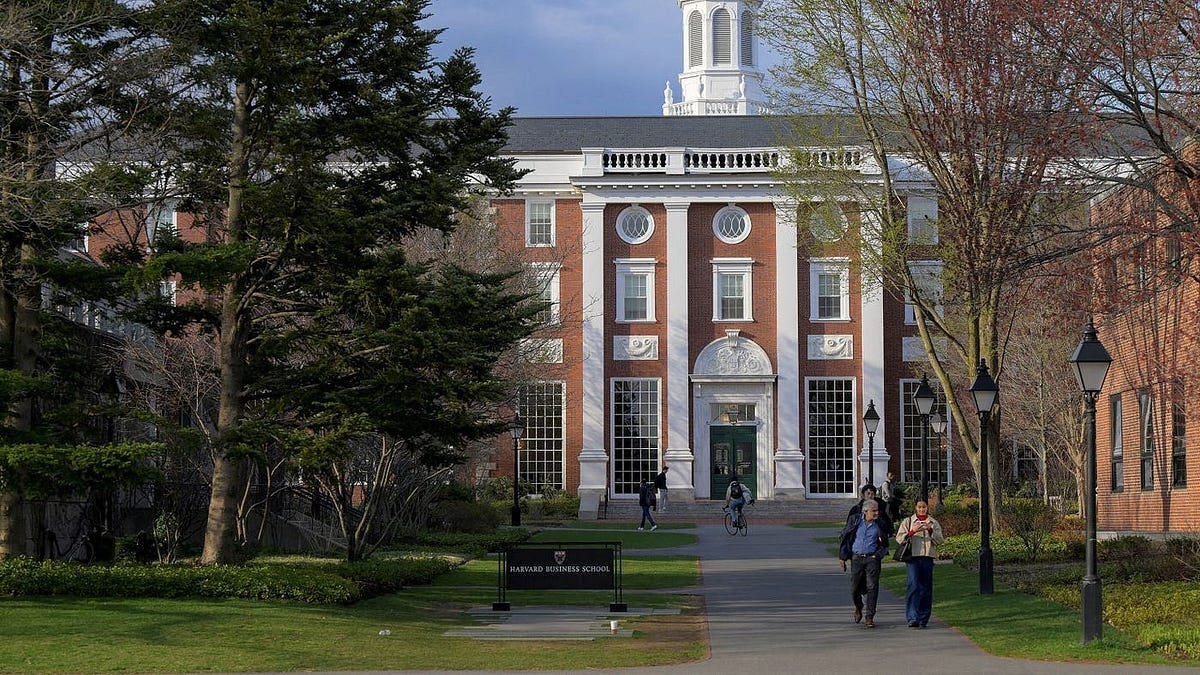
Over the past two decades, Washington Monthly has published rankings with the intent of avoiding what it believes the most prestigious rankings seek to reward: an institution’s wealth, prestige, and exclusivity. This tendency causes most lists to include the same top 10 or 20 elite universities, most of which are private. For example, when the U.S. News & World Report published its 2026 college rankings on September 25, the results were predictable. Although there were some slight changes, Ivy League schools such as Princeton and Harvard remained in their top five. Historically, administrators have frantically and obsessively followed and simultaneously derided these rankings. Meanwhile, Washington Monthly’s list was as follows:
· California State University, Fresno
· University of Texas Rio Grande Valley
· The University of Central Florida
· University of Illinois Chicago
· University of California Berkeley
· Northeastern State University
· Metropolitan State University
· Appalachian State University
· Mississippi University for Women
· Elizabeth City State University
In 2025, in a change from established practice, Washington Monthly integrated four-year colleges and universities — public and private, large and small, and research focused and teaching intensive — into a linear roster of more than 1,400 institutions, titled “2025 Best Colleges for Your Tuition (and Tax) Dollars.” The publication also reworked its methodology to focus more acutely on the qualities it believed the American public were avidly seeking from the country’s higher education institutions. Not surprisingly, assisting students of modest economic means to obtain degrees that can provide dividends in the marketplace prevents them from graduating with suffocating amounts of debt and adequately equips them to become active members of society. While these are vital steps along the journey to building a post baccalaureate society, the expectations of many, if not most, of the American public can be highly presumptive and pedestrian.
Since the 1990s, the college admissions game has seemingly morphed into a mental, emotional, and financial battle where parents and students are psychologically and emotionally encouraged to engage in wanton acts of aggression in an effort to secure a spot at the nation’s most prestigious institutions. Such brutal competition makes acceptance into a highly exclusive college resemble an intense game of last person standing. It is as if college admissions offices, high school guidance counselors, and other stakeholders have banded together to torture and terrorize American teenagers. Among the wealthy in particular, the obsession with college admissions has often been frenzied. Recall the 2019 varsity blues college admissions scandal that exposed the numerous prominent CEOs, celebrities, and athletes who were willing to break the law to ensure that their children secured admission to the nation’s elite schools. Additionally, an acquaintance informed me that when he was visiting his relatives over the holidays, one of his nieces told him she was already working on gaining acceptance into an Ivy League institution. However, this niece was only in the eighth grade! Although having goals and preparing for them can be useful within reason, the sort of pressure my acquaintance’s niece is facing is simply unhealthy. It is truly a sad state of affairs.
As a graduate student in my mid-twenties, I worked in an admissions office at a land grant institution. Although I was not an actual admissions officer, my work afforded me the opportunity to hear stories from such officers. They described what stood out about applicants that led to their unpredictable admissions decisions. One student who gained admission was a first-rate violinist, another grew up on a pig farm in Kansas, and a third was an outstanding poet who happened to be disabled. Hearing such stories was a revelatory experience. Washington Monthly, in compiling its data for the list, similarly considered a variety of factors that make an institution socially, academically, environmentally, and financially feasible for both students and parents.
Competition to gain admission to more exclusive institutions has become more dramatic with each passing year. Augmenting academic standards, ever-rising tuition costs, drastic cuts in state funding for higher education, and increasingly abrasive attacks on college education coupled with fiercely acerbic debates about its value (or lack thereof) in various segments of society have compounded the problem.
Because of such heightened acrimony, many higher education institutions are being confronted with the complicated task of issuing expected reactions that do not offend shareholders, students, professors, alumni, or current and would-be donors. This drama is occurring at a time when public opinion of higher education — always ambiguous at best, especially among those on the political, social, and cultural right — has reached new depths. The sector has come under increased scrutiny from many quarters: politicians, students, college graduates, and the public.
The Trump administration has wasted no time in seizing upon and weaponizing such resentments by targeting elite higher education institutions, threatening to withhold funding, and issuing other ultimatums. The Trump administration has wasted no time in seizing upon and weaponizing such resentments by targeting elite higher education institutions, threatening to withhold funding, and issuing other ultimatums. Recently, Trump invited nine universities to cut a deal with the government. Those institutions would have been required to accept a litany of conditions in exchange for regular distribution of federal funding for scientific research. Fortunately, MIT, Massachusetts Institute of Technology President Sally Kornbluth refused to capitulate to Trump administration demands.
The issue of campus speech has become a political football that many right-wing politicians in local, state, and federal government are kicking around to pursue their own agendas. The assumption that academia is far more liberal than society overall is dubious. Moreover, although certain educational departments may lean in a leftward (or faux liberal) direction, donors, alumni, boards of trustees, and the majority of stakeholders tend to be conservative.
Nevertheless, even in this depressingly adversarial political climate, we must congratulate those young people who manage to achieve their dream of going to college. We hope their four years will be happy and productive. As for those who are not as fortunate, it is not the end of the world. Their parents need to step in and suggest vocational education, apprenticeships, and internships as just a few of the alternative paths that they can pursue.
In his national bestseller Where You Go Is Not Who You’ll Be, Frank Bruni, op-ed columnist at The New York Times and journalism professor at Duke University, made a convincing case that too many people frequently overemphasize prestige when choosing a college, as if it is the only vital factor. Even though it was published almost a decade ago, Bruni’s book remains relevant today. Not everyone is cut out for the traditional college journey. Consider the following list of eminent individuals and the colleges they attended:
· Stephen King, University of Maine
· Timothy Busfield, East Tennessee State University
· Oprah Winfrey, Tennessee State University
· Ronald Reagan, Eureka College
· William Macy, Goddard College
Each of them attended well-respected, quality schools but not necessarily elite ones. Their lives are proof that one’s success does not depend on which school one attends. Adults are already aware of the hard reality that life doesn’t always turn out the way one expects it to. You may not get that coveted job or promotion. You may lose a dear friend or parent to an untimely death. You may endure a bitter divorce. You may become afflicted with a life-altering disease. These are the sort of experiences that can make rejection from one’s first-choice school seem trivial. The vast majority of young people will likely get past their initial disappointment and, by fall, be happily settled into campus life at whichever school they attend. For parents of children facing the predicament of not being selected by their preferred college, my sagacious advice would be that life will go on.
Elwood Watson Ph.D. is a professor of history, Black Studies, and Gender and Sexuality Studies at East Tennessee State University. He is a cultural critic, syndicated columnist, and author of the books,: Talkin’ To You, Bro!: Liberate Yourself from the Confusing, Ambiguous Messages of Contemporary Masculinity (Lasting Impact Press, 2021) and Keepin’ It Real: Essays on Race in Contemporary America. https://press.uchicago.edu/ucp/books/book/distributed/K/bo40060337.html (University of Chicago Press 2019)